Kudu, sable, oryx and Cape buffalo without the overseas trip. How a Texas Hill Country hunt compares to an African safari.
For most hunters, an African safari sits at the top of the list. A spiral-horned kudu, a jet-black sable, a Cape buffalo. For a long time the only way to hunt them was to fly halfway around the world. That is no longer true.
The same animals, closer to home
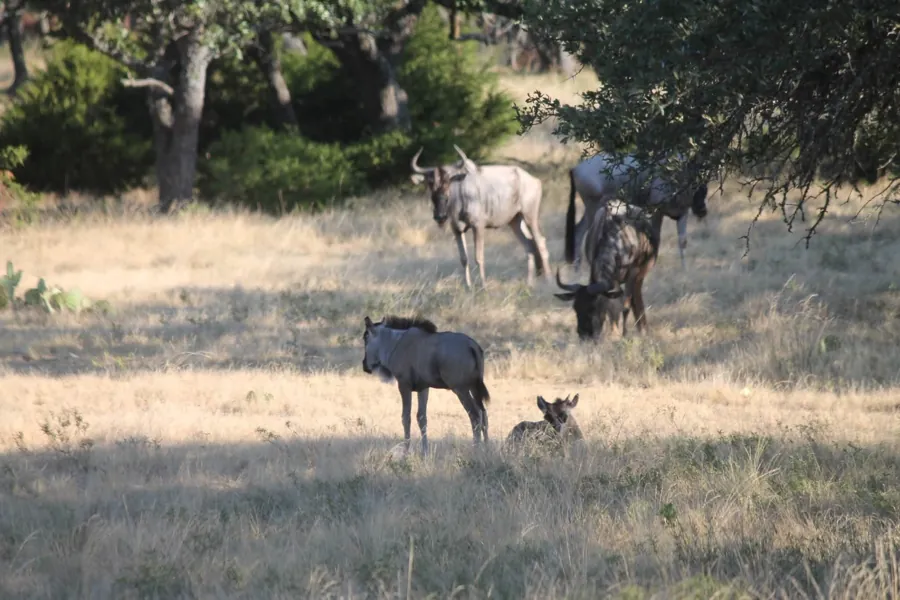
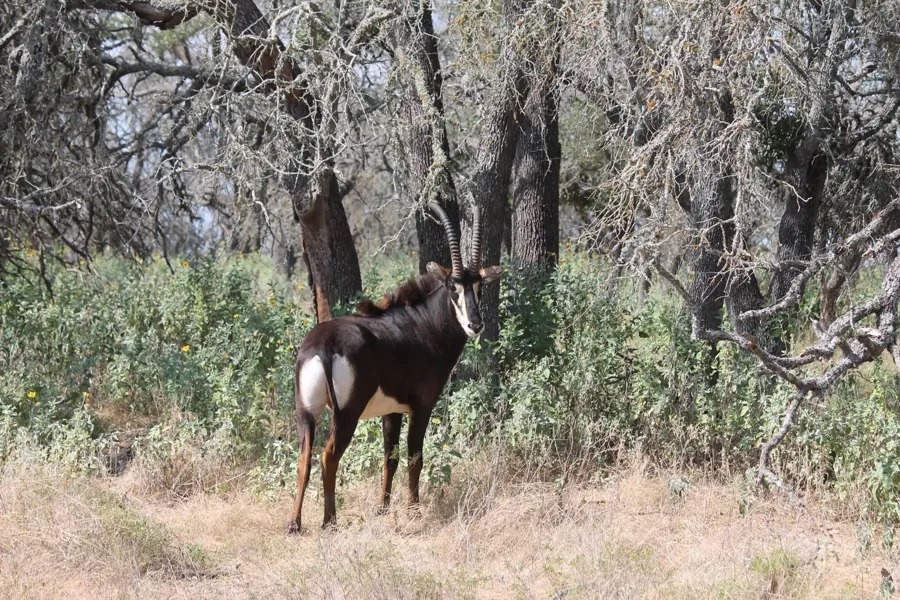
The Texas Hill Country holds herds of African, Asian and European game that rival what you'd find on many overseas concessions. At Black Eagle Ranch alone there are more than thirty species, from scimitar-horned oryx and addax to Nile lechwe and eland.
Travel and time
An African safari usually means long international flights, connections, time zone changes and a week or more away. A Texas hunt can be a long weekend. Harper is about an hour and forty-five minutes from San Antonio and two hours from Austin, so most hunters can drive in the night before and be in the field at first light.
Rifles, permits and paperwork
Traveling abroad with a firearm means permits, airline rules and customs on both ends. Bringing a trophy home from Africa often adds export permits, import declarations and, for some species, international wildlife paperwork, all before the taxidermist can start. A Texas hunt avoids almost all of that. You need a Texas hunting license, and your trophy never leaves the country.
What stays the same
The animals are just as wary and the hunting is just as real. Kudu still disappear into brush they barely fit behind. Oryx still watch the open grass. Buffalo still demand respect and a heavy rifle. On big Hill Country ground you still glass, stalk and earn your shot.
You still have to hunt them. You just don't need a passport to do it.
Is it a substitute for Africa?
For some hunters, nothing replaces the trip itself, and that is fair. For many others, a Texas exotic hunt is the way to finally take the animal they have wanted for years, or to add several species to the wall without a two-week trip. Some do both.
Guided hunts for 33 exotic species in Harper, Texas.