
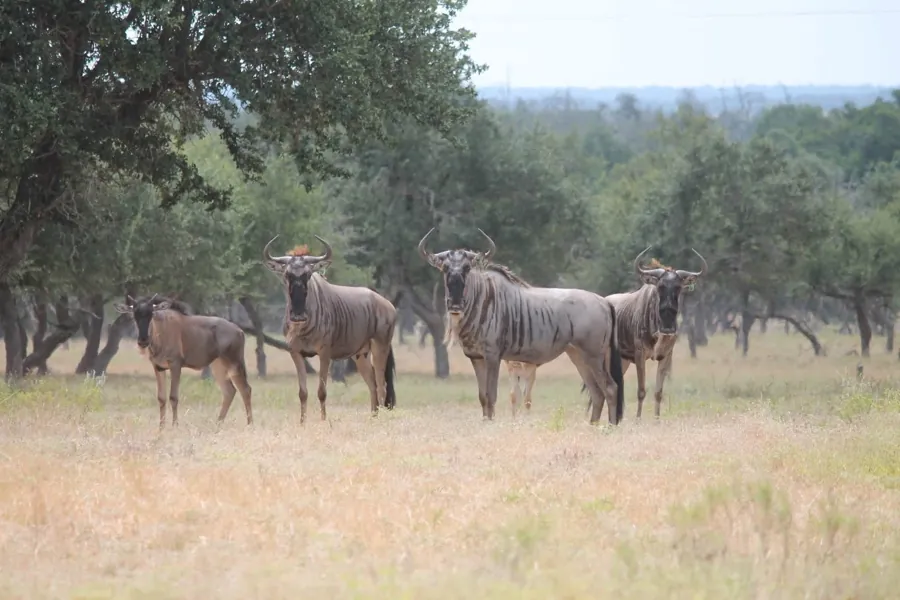
Blue Wildebeest Hunts in Texas
Connochaetes taurinusThe poor man's buffalo. Tough, tough, tough.
- Family
- Plains Game
- Native range
- Eastern & Southern Africa
- Weight
- 400–600 lb
- Horns
- 20–30 in spread
- Trophy fee
- $7,500
- Lodge & guide
- $350 / hunter / day
About the Blue Wildebeest
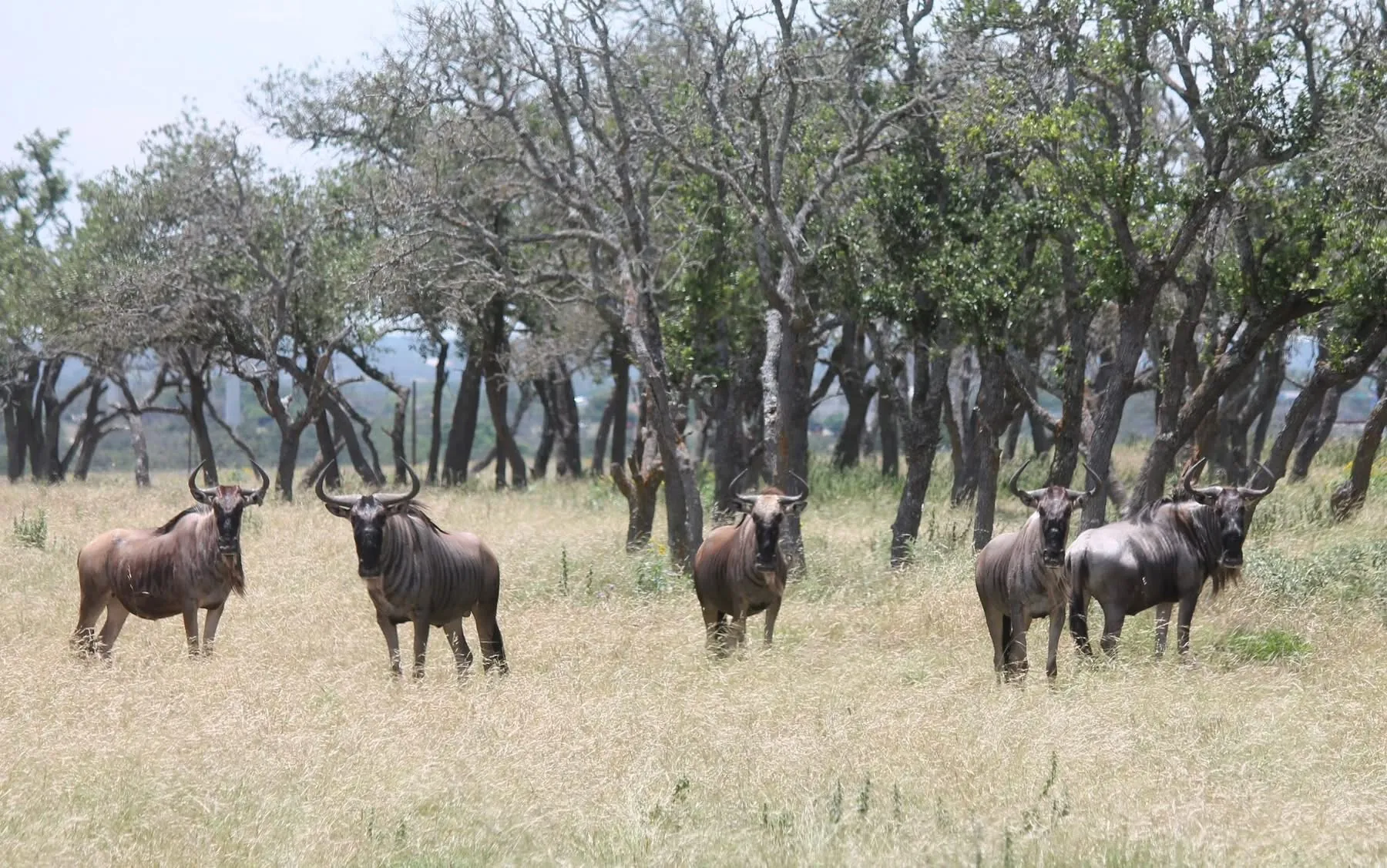
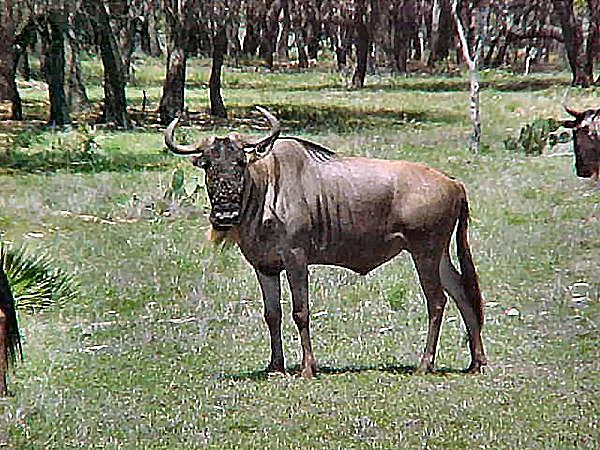
Hunters have long called the wildebeest "the poor man's buffalo" because it's heavy in front, built like a tank, and tough. Bulls carry curved horns and a black beard, and their grey hide is marked with faint dark stripes.
Wildebeest are herd animals, and the bulls are always watching. Once one runs, the rest follow.
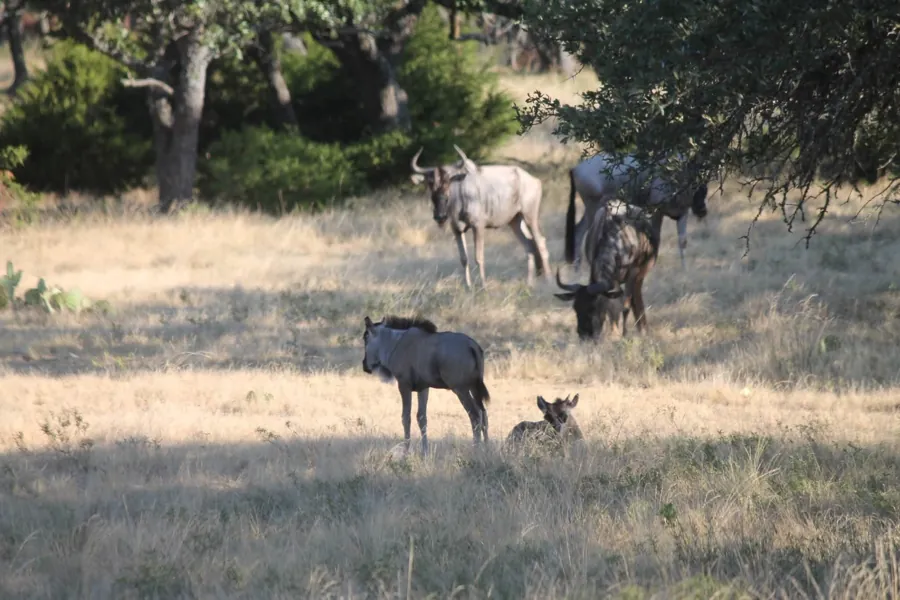
Hunting Blue Wildebeest at Black Eagle Ranch
At Black Eagle Ranch, wildebeest move in groups through open grass and oak flats. They are hard to approach and harder to put down, so shot placement and a solid bullet matter.
Look for a bull with a hard, heavy boss across the top of the head and horns that hook up and in.
Blue Wildebeest Hunting FAQ
Why is wildebeest called the poor man's buffalo?
Wildebeest are tough for their size and can take a lot of punishment. Hunters treat them with the same respect for shot placement as a much bigger animal.
Where can I hunt Blue Wildebeest in Texas?
Black Eagle Ranch in Harper, Texas offers guided blue wildebeest hunts in the Texas Hill Country, about 25 minutes from Fredericksburg and under two hours from San Antonio.
How much does a blue wildebeest hunt cost?
The trophy fee for blue wildebeest at Black Eagle Ranch is $7,500, plus the lodge and guide rate of $350 per hunter per day. The trophy fee is paid only for animals taken, and the balance is due at the completion of your hunt.
How do I book a blue wildebeest hunt?
Request your dates on our online reservation calendar and select Blue Wildebeest, or call Daniel at (830) 928-3161 or Todd at (409) 300-0575.
More from the Collection.
Reserve your Blue Wildebeest.
Only eight hunters a day, and the rarest animals go first.